
Key Takeaways
- For 2026, proactive Insider Risk Management is not just a security investment; it’s a leadership tool for governance, accountability, and resilience.
- Insider risk is growing and often stems from behavioral signals like frustration, detachment, or confusion, not just malicious intent.
- Traditional tools miss early behavioral and sentiment shifts that precede risk events.
- Veriato IRM applies AI-powered sentiment analysis and behavioral baselining to detect risk early and ethically.
- Cross-functional teams, from security to HR to legal, benefit from shared visibility and defensible insights.
Proactive Insider Risk Management: The Smartest Cybersecurity Investment for 2026
One reality that organizations must accept in 2026 is that insider risk can no longer be a secondary security concern. It is a material business risk with direct implications for governance, operational resilience, and enterprise value.
Did You Know?
The average time to detect and contain an insider threat is 81 days in 2025, during which time substantial damage can occur.
Source: 2025 Cost of Insider Risks Global Report by Ponemon Institute
A minority of insider threats today are classic malicious offenses. More often, they emerge gradually through disengagement, burnout, policy drift, or misuse of access, especially in complex hybrid environments. Traditional security tools weren’t designed to detect shifts in tone, frustration, or intent, which are the key behavioral and sentiment signals that precede risk. As a result, insider risk often goes unnoticed until damage has already occurred. A more proactive approach is warranted.
Insider Risk Is a Business Risk
For business leaders, Insider Risk Management is more than monitoring activity. It’s a strategic investment that empowers them to make confident, informed decisions based on visibility, accountability, and real-time insights.
Nearly half of organizations report that insider threats are increasing year over year. This trend reflects broader changes in how work gets done. Distributed teams, multiple devices, and constant digital communication create new risk patterns that legacy tools cannot see.
Insider incidents carry financial, regulatory, and reputational consequences. They can disrupt operations, expose sensitive data, and erode trust with customers and regulators. This shifts insider risk from the SOC to the boardroom. Managing it effectively requires strategy, not just technology.
Why Boards and Executives Are Paying Attention
Regulators and stakeholders are raising expectations around internal controls, accountability, and oversight. Boards are increasingly expected to understand where insider risk exists, how it is being managed, and how leadership will respond if an incident occurs.
Proactive Insider Risk Management supports this responsibility by providing clear, defensible insight into workforce behavior and risk exposure. It allows leaders to move from reactive explanations to informed oversight, backed by real data rather than assumptions.
Veriato IRM transforms complex behavioral data into clear, board-ready insights, empowering leadership teams to make informed, strategic decisions.
From Reactive Defense to Proactive Risk Management
Most traditional cybersecurity tools are reactive by design. They look for known indicators, policy violations, or predefined rules. Insider risk rarely follows those patterns.
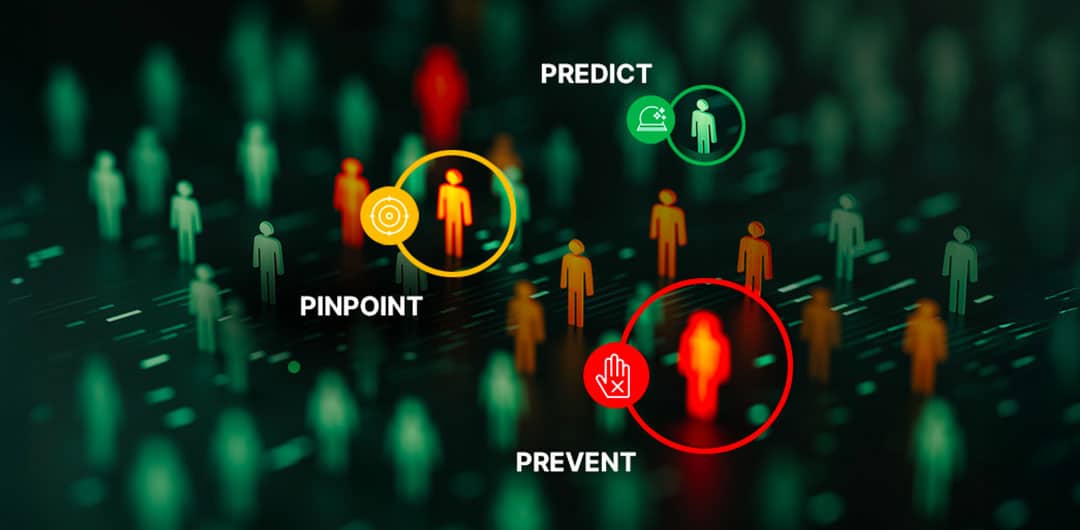
Behavioral risk builds over time. Veriato IRM applies behavioral intelligence and GenAI to identify these shifts early using sentiment analysis and contextual behavior modeling. By continuously baselining user behavior and analyzing more than 130 behavioral signals, the platform helps organizations identify emerging risks before they escalate into incidents.
This is the difference between responding after harm occurs and preventing it altogether.
A Practical Example of Proactive Insight
Consider a remote employee with access to sensitive customer data. Over time, their communication tone becomes less positive, and they express frustration, detachment, or cynicism. Veriato’s sentiment engine detects these linguistic shifts, correlating them with behavioral drift and unusual access timing to surface risk that would otherwise go unnoticed.
Traditional tools may see nothing actionable. No rule is broken. No alert fires.
With Veriato IRM, these changes are analyzed in context. Sentiment, behavior, and access patterns are correlated and scored in real time. Security teams are alerted early. HR has objective data to assess disengagement. Leadership gains clarity before risk becomes reality.
This is proactive risk management in practice.
Understanding the ‘Why’ Behind Risk: The Role of Sentiment Analysis
Traditional tools flag actions. Sentiment analysis reveals intent. Veriato IRM applies natural language processing (NLP) to evaluate tone, emotion, and sentiment across communications, including email, chat, and search queries. When a user’s sentiment trends toward hostility, anxiety, or detachment, the system flags those deviations and combines them with activity data for deeper risk scoring. This allows organizations to detect disengagement, burnout, or even hostile intent days or weeks earlier than conventional monitoring.
Sample scenario: Merger Anxiety and Early Exit Risk
During an M&A transition, employees begin referencing the acquiring company in internal chats and emails. Veriato IRM flags negative sentiment and confusion around the change, especially in a group of key engineers with access to source code.
Sentiment analysis surfaces phrases like “this is a mistake” and “I’m updating my resume.” Combined with increased file access, after-hours logins, and external drive usage, the platform escalates the risk score. Leadership can then intervene early, secure critical IP, and hold retention conversations with at-risk employees, preventing potential IP theft or abrupt exits.
Other common examples include early burnout detection and surfacing toxic communication before formal complaints arise.
Why IRM Requires Cross-Functional Alignment
Insider risk does not belong to one department. It sits at the intersection of security, HR, legal, compliance, and executive leadership.
Effective IRM requires shared visibility and clearly defined roles. Veriato IRM is designed to support this model by providing role-based access and function-specific insights.
- Security teams gain early warning signals and reduced alert fatigue through behavioral risk scoring.
- HR teams gain objective, ethical insight to support investigations, engagement, and workforce health.
- Compliance and legal teams gain defensible audit trails and policy oversight without over-collection.
- Executives gain a clear view of organizational risk posture and trends that inform strategic decisions.
This shared foundation enables faster cross-functional alignment and stronger governance across the organization.
Why Proactive IRM Is a Smart Investment for 2026
Cybersecurity budgets are under pressure. Boards are asking harder questions about ROI, risk reduction, and long-term resilience.
Proactive Insider Risk Management delivers value on all three fronts. It reduces the likelihood and impact of incidents. It improves investigation efficiency. And it provides leadership with real-time insight into how risk evolves across the workforce.
For 2026 planning, IRM should be viewed not as another security tool, but as an operational investment that strengthens governance, protects people and data, and supports confident growth.
Where Traditional Tools Fall Short
Tools like DLP, EDR, and IAM play an important role in security stacks, but they focus on events and access. They do not understand behavior, intent, or context.
Veriato IRM fills this gap with a behavioral layer that reveals risk patterns ethically, respects privacy and data minimization, and supports legal and HR professionals’ confidence in responsible practices.
This makes IRM a natural extension of modern cybersecurity strategies rather than a replacement.
Final Perspective
The smartest cybersecurity investments for 2026 will be proactive, not reactive. They will help leaders see risk earlier, act with confidence, and align teams around shared insight.
Proactive Insider Risk Management delivers exactly that.
Veriato IRM gives organizations the behavioral visibility needed to manage insider risk as a business priority, not an afterthought. With AI-driven sentiment analysis at its core, Veriato IRM empowers organizations not only to see what users are doing, but also to understand why. This human context is what makes IRM not just smart, but strategic.
If your 2026 strategy includes stronger governance, resilient operations, and informed leadership, IRM is not optional. It is foundational. Want to see how this looks in action? Schedule a demo to explore firsthand.
FAQs
Q: How does Veriato IRM help organizations be more proactive?
A: Traditional tools are reactive; they detect incidents after they occur. Veriato IRM proactively surfaces risk signals, such assentiment shifts and behavioral drift, giving leaders more time to intervene before harm is done.
Q: Why is insider risk a board-level concern now?
A: As insider incidents grow more frequent and costly, regulators and stakeholders are pushing for stronger governance. Veriato IRM provides board-ready insights into workforce risk, enabling better accountability and faster incident response.
Q: What exactly does sentiment analysis detect?
A: Sentiment analysis evaluates tone, emotion, and language patterns in digital communications—like email or chat—to surface early signs of frustration, detachment, or hostility. These shifts often precede policy violations or exit, and are invisible to traditional tools.
Q: Is sentiment monitoring ethical and compliant?
A: Yes. Veriato IRM is designed with built-in data redaction, role-based access, and policy-based controls to ensure ethical oversight. The platform aligns with global data privacy standards while enabling proactive risk visibility.
Q: How is Veriato IRM different from other security tools?
A: Traditional tools like DLP and EDR track events or access. Veriato IRM adds a behavioral layer that reveals why risk is emerging, not just what happened. It combines sentiment analysis, behavioral baselining, and AI-driven scoring to surface risk early and ethically.
Insider Risk Management Guide to Behavioral Visibility
Discover how modern Insider Risk Management leverages behavioral visibility, sentiment analysis, and AI-driven risk scoring to strengthen security, compliance, and workforce resilience.
About the author