
Key Takeaways: What 2026 Holds for Insider Risk
- AI and Sentiment Analysis Take the Lead
In 2026, AI-powered risk prediction and sentiment analysis are no longer emerging; they’re essential. Organizations that operationalize behavioral signals and intent-based insights will stay ahead of insider threats. - Insider Risk Becomes a Cross-Functional Mandate
Security, HR, compliance, and legal teams must move beyond silos. Cross-functional collaboration, shared data, and clear governance models are critical for ethical and effective insider risk management. - Zero Trust Gains Power Through Behavioral Insight
When combined with continuous behavioral baselining, Zero Trust becomes more than access control, it becomes intent-aware security. This pairing tightens defenses and adapts dynamically to user context. - Hybrid Work Continues to Complicate Oversight
While no longer new, hybrid work remains a core factor in insider risk due to its impact on visibility, access sprawl, and behavioral context. It amplifies complexity in detection and response, making continuous monitoring and behavioral baselining more critical than ever. - Modern IRM Is the Strategic Cybersecurity Investment
Solutions like Veriato IRM offer cross-functional visibility, ethical monitoring, and predictive defense, making them a top cybersecurity investment priority for 2026.
2026 Insider Risk Predictions: What Organizations Must Prepare For
As 2026 unfolds, insider risk is being redefined by AI, behavioral analytics, and cross-functional accountability. The ability to predict risk based on behavior and intent, rather than react to outcomes, is reshaping how organizations defend against internal threats. Meanwhile, persistent factors like hybrid work continue to complicate visibility and oversight, amplifying risk across modern environments.
The organizations that thrive will treat insider risk as a strategic, organization-wide priority backed by real-time insight, ethical monitoring, and shared governance. In this piece, we explore the five trends shaping insider risk in 2026 and the practical steps forward-looking organizations are taking to stay ahead.
The State of Insider Risk: A Rapidly Changing Landscape
Insider threats are no longer a niche security issue, they are now one of the most persistent and costly forms of risk organizations face.
- 83% of organizations report insider attacks, yet only a minority feel confident in catching them early. (cybersecurity-insiders.com)
- Insider incidents are more difficult to detect than external attacks according to 93% of security leaders surveyed. (cybersecurity-insiders.com)
- Remote work has further amplified these risks, with some research showing a 58% increase in insider threats since hybrid models became mainstream. (insiderisk.io)
- The average annual cost of an insider incident exceeds $17 million, up from previous years. (Ponemon Institute 2025)
Traditional tools like keyword alerts, DLP, and static access controls simply weren’t designed for the behavioral complexity now at play. The risk landscape requires a new, predictive, and context-rich approach.
Did You Know?
- 83% of organizations report insider attacks
- The average cost of an insider threat incident is $17.5M
- Most insider risks go undetected for over 90 days
Source: Cybersecurity Insiders, Insider Risk Report 2025 and Ponemon 2025 Cost of Insider Threats Global Report
Trend #1: AI Becomes Core to Detection and Prevention
Artificial intelligence is no longer just a buzzword; organizations are turning to AI as a core enabler for insider risk detection.
AI-driven systems can analyze massive volumes of behavioral signals, spot deviations, and reduce false alarms far better than rules-based tools. Advanced platforms apply adaptive risk scoring, pattern analysis, and context-driven alerts that learn normal behavior over time.
Predictions for 2026 indicate:
- A continued shift from reactive alerting to predictive analytics
- AI-powered tools will be expected to provide precise early-warning indicators, not just logs
- Organizations that operationalize AI with strong governance will gain a competitive security advantage
- AI tools will increasingly collaborate with workforce systems, requiring strong cross-functional frameworks for oversight and trust
Sentiment analysis, one of the most powerful AI-driven insights, is also emerging as a key signal. Tone, language patterns, and communication shifts can indicate disengagement, insider stress patterns, and other precursors to risky behaviors that traditional models miss. Advanced sentiment analysis helps organizations detect risk before action occurs.
Companies need real-time visibility into behavioral risk across their organizations. Legacy tools only show you part of the picture.
Veriato IRM provides this visibility. It continuously monitors user behavior, detects anomalies, and surfaces early indicators of risk. The platform supports security, HR, compliance, and leadership teams with the context needed to take timely action.
Trend #2: Sentiment Signals and Behavioral Context Become Table Stakes
Behavioral insight isn’t just a nice-to-have; it’s becoming foundational.
AI can parse communication signals and correlate them with access patterns, file activity, login anomalies, and workflow deviations. This helps teams answer not just what happened, but why it might be happening, a critical difference as insider incidents become more subtle.
Sentiment analysis enriches this capability by revealing signals of disengagement or dissatisfaction that precede risky activity. When integrated into IRM workflows, sentiment analytics can elevate early-warning detection to a new level, enabling proactive defenses rather than reactive responses.
What this looks like:
A customer support specialist working remotely begins to show changes in tone in ticket responses, shorter replies, reduced engagement, and elevated response times. At the same time, shows a rise in after-hours access to customer records and lateral movement across internal platforms. While no rules are violated, the behavioral shifts trigger an early-risk alert. HR is able to check in with the employee and resolve a burnout issue before performance and data risk escalated.
Trend #3: Cross-Functional Risk Ownership Replaces Security Silos
In 2026, insider risk will no longer be treated solely as a security problem.
Organizations will shift toward shared stewardship models where HR, legal, compliance, and executive teams collaborate with security. This holistic approach delivers:
- Clear governance frameworks
- Ethical monitoring and transparency
- Faster, well-informed decisions
- Reduced operational blind spots
As behavioral data grows central to risk management, cross-functional alignment becomes essential. Not just for detection, but for organizational trust and compliance.
Trend #4: Zero Trust and Behavioral Baselines Combine for Resilience
The rise of Zero Trust architectures complements behavioral insider risk strategies. Zero Trust assumes no implicit trust, making continuous validation essential. When paired with behavioral intelligence, organizations gain a robust risk posture that:
- Validates access and intent continuously
- Detects anomalies outside of static policy violations
- Adapts dynamically as user contexts evolve
Zero Trust doesn’t replace behavioral risk scoring; it enhances it by tightening control and visibility around every user, every interaction.
Trend #5: Hybrid Work Remains a Persistent Blind Spot
Hybrid and remote work models are no longer novel, but they continue to expose gaps in traditional security approaches. Dispersed workforces increase the attack surface and reduce visibility, especially when users operate outside of managed devices, networks, or hours.
While organizations have adapted collaboration tools and endpoint controls, those measures often fall short in detecting the subtle human behaviors that precede risk.
Persistent challenges include:
- Shadow IT and unauthorized SaaS usage
- Unsupervised after-hours access to sensitive systems
- Longer detection and containment timelines
Hybrid work isn’t the risk; it’s the amplifier. Without behavioral context and sentiment insight, organizations miss early signals of burnout, policy fatigue, or intent. Continuous monitoring across environments, combined with AI-driven baselining, remains essential to mitigate these hidden vulnerabilities.
What to Watch in 2026
- Increased use of AI/GenAI in real-time insider threat prediction
- Mainstream adoption of sentiment analysis in workforce risk tools
- Shift from IT-owned to cross-functional insider risk programs
- Demand for IRM solutions that support remote, hybrid, and global teams
- Greater emphasis on ethical monitoring and behavioral transparency
Final Thought
The insider risk landscape is changing. The organizations that thrive in 2026 will be those that treat human context, AI intelligence, and proactive governance as core capabilities, not afterthoughts.
Veriato IRM delivers the behavioral intelligence, sentiment insight, and proactive detection capabilities necessary to transform insider risk from a potential liability into a strategic advantage.
Now is the time to make insider risk a strategic priority.
Explore how Veriato IRM supports proactive risk management across security, HR, legal, and the executive team. Schedule a demo.
FAQs
Q: What’s driving the increase in insider threats in 2026?
A: Greater reliance on hybrid workforces, employee burnout, access complexity, and subtle behavioral changes are all contributing. These factors make it harder for traditional tools to detect risk before damage occurs.
Q: How does sentiment analysis help detect insider risk?
A: Sentiment analysis identifies emotional and linguistic shifts in communication that can signal disengagement or frustration, all key indicators of elevated risk that often precede harmful actions.
Q: Can Veriato IRM detect threats even if no policies are violated?
A: Yes. Veriato IRM monitors behavioral baselines and context—not just rules. It flags deviations that indicate risk, even when traditional DLP or SIEM tools show no violations.
Q: How does Veriato IRM support hybrid and remote environments?
A: It provides visibility into user behavior, access patterns, and sentiment regardless of location. This gives organizations a digital window into remote operations without invasive monitoring.
Q: Who uses Veriato IRM beyond the security team?
A: Legal, HR, compliance, and executive leadership benefit from Veriato’s role-based access, audit-ready insights, and ethical monitoring controls that support shared accountability.
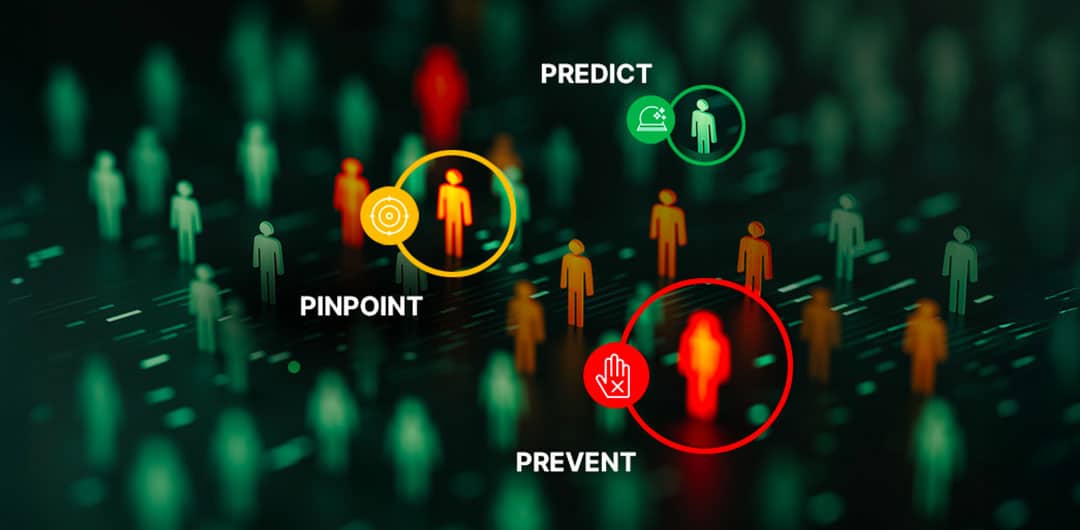
Insider Risk Management Guide to Behavioral Visibility
Discover how modern Insider Risk Management leverages behavioral visibility, sentiment analysis, and AI-driven risk scoring to strengthen security, compliance, and workforce resilience.
About the author